Is Craniosacral Therapy Evidence-Based? What the Research Actually Says
Anyone who has looked into craniosacral therapy with a critical eye has noticed that the research picture is not simple. Studies exist, reviews of those studies exist, and they do not all agree. This article walks through what the research actually shows, where it falls short, and what a practitioner who takes the evidence seriously looks like in practice.
The practice is grounded in real science
Before asking whether CST produces measurable outcomes in clinical trials, it is worth asking a prior question: is the thing practitioners are working with actually real?
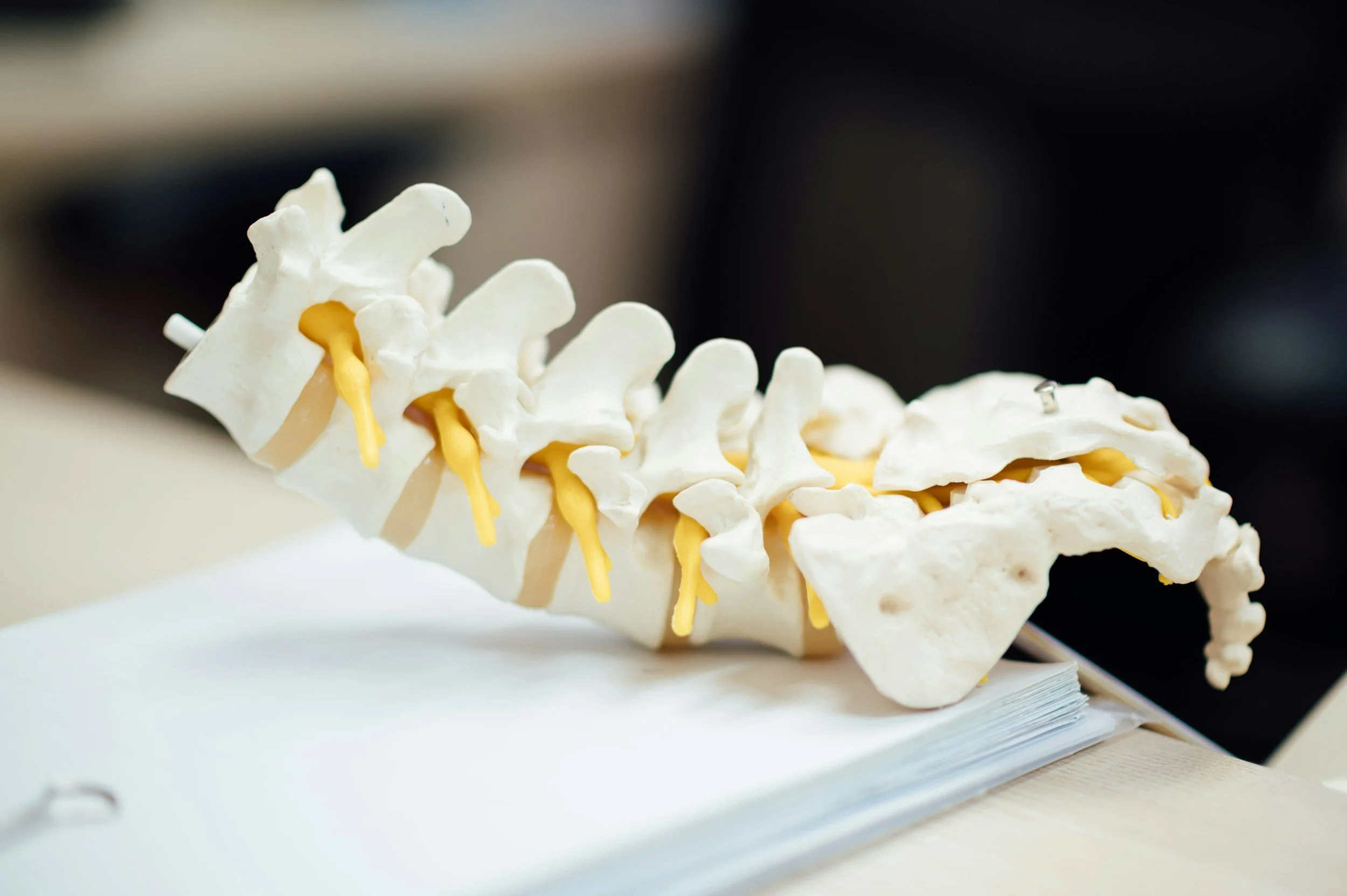
The craniosacral system — the membranes and cerebrospinal fluid that surround and protect the brain and spinal cord from skull to sacrum — is anatomically real and documented in neuroscience literature independent of CST. The rhythmic motion of cerebrospinal fluid is not a theoretical construct invented by manual therapists. A 2020 study published in the Journal of Bodywork and Movement Therapies directly measured a third rhythmic motion of the human head, distinct from cardiac and respiratory rhythms, using objective instrumentation, providing evidence for the phenomenon practitioners are trained to palpate.
The proposed mechanism also has biological plausibility. A 2024 systematic review and meta-analysis examining CST's effects on heart rate variability found a moderate short-term increase in parasympathetic nervous system activity following treatment. In plain terms: CST appears to shift the autonomic nervous system toward a calmer, less reactive state. That finding aligns with what clients consistently report experiencing, and it points toward a plausible physiological pathway even where outcome trials remain inconclusive.
The honest summary: CST is a practice built on real anatomy, a plausible mechanism, and a growing but still developing outcome evidence base. Those are not the same as saying it is pseudoscience.
Why proving outcomes is harder than it sounds
Understanding why the randomized controlled trial (RCT) literature on CST is mixed requires understanding what makes manual therapy research structurally difficult — and what makes CST specifically harder than most.
The blinding problem. In pharmaceutical trials, neither the patient nor the researcher knows who received the drug. In manual therapy, the practitioner always knows what they are doing. Sham controls in CST research typically involve a practitioner placing hands on the body without applying the actual technique. It’s better than nothing, but imperfect. The 2016 Haller sham-controlled neck pain trial is notable precisely because it attempted rigorous blinding, which is part of why it carries more weight than many other studies in the literature.
The individualization problem. A trained CST practitioner follows what they detect in the craniosacral rhythm, adapting session by session to each client. RCTs require a standardized protocol applied the same way to every participant. That standardization is methodologically necessary but clinically artificial: it means trials may be testing a constrained version of CST that does not reflect how skilled practitioners actually work.
The outcome measurement problem. Pain scales and disability indexes are reasonable instruments, but CST clients often report changes that are harder to quantify: better sleep, reduced anxiety, a sense of ease in daily life, improved nervous system regulation. Those outcomes are real but do not fit neatly into the measurement tools most RCTs use.
The funding problem. CST research is largely conducted by small academic groups without pharmaceutical-scale funding. Most trials in the literature have fewer than 100 participants, which limits statistical power and makes it difficult to detect moderate effects even when they exist.
None of this means the design challenges excuse weak research or that inconclusive trials should be dismissed as irrelevant. It means "the RCTs are mixed" is a more complicated statement than it first appears.
What the most current reviews found
Two independent systematic reviews and meta-analyses published in 2024 represent the most current and comprehensive assessment of CST's clinical effectiveness, and both warrant honest attention.
Ceballos-Laita and colleagues, including Edzard Ernst of the University of Exeter (one of the most cited critics of complementary medicine), analyzed 15 RCTs across musculoskeletal and non-musculoskeletal conditions. Their conclusion: no statistically significant or clinically relevant effects across conditions studied, including headache disorders, neck pain, low back pain, fibromyalgia, and infant colic. Amendolara and colleagues at Noorda College of Osteopathic Medicine (notably, an osteopathic institution) reached similar conclusions in a separate meta-analysis published the same year.
These findings should be taken seriously. They represent the current state of the aggregate RCT evidence, and a practitioner who glosses over them is not engaging with the research honestly.
What the reviews also note, and what deserves equal attention: the methodological quality of the included studies was variable, risk of bias was high in many trials, outcome measures were heterogeneous across studies, and sample sizes were small. The reviewers themselves flag these limitations. That does not overturn their conclusions, but it does mean the question remains genuinely open rather than settled.
What favorable studies have found
Individual trials and earlier meta-analyses tell a more varied story.
The 2020 Haller meta-analysis, covering 10 RCTs and 681 patients across neck and back pain, migraine, headache, fibromyalgia, epicondylitis, and pelvic girdle pain, found small to medium effects on pain intensity and functional disability compared to treatment-as-usual, and medium to large effects compared to sham controls. Those effects held at six months. The 2016 Haller sham-controlled neck pain trial found significant and clinically relevant reductions in pain intensity at both 8 and 20 weeks, with improvements in quality of life, wellbeing, and anxiety as secondary outcomes.
A 2011 descriptive outcome study of 157 patients treated by 10 different practitioners (including within the UK National Health Service) found that 74% reported meaningful improvement in their presenting problem and 67% reported improvement in general wellbeing. This is observational data without a control group, and it does not prove effectiveness. But it documents real-world clinical signal across a range of practitioners and conditions, and it is worth including in an honest picture of what the evidence looks like.
The reason individual trials show effects while aggregate meta-analyses reach mixed conclusions is an active methodological debate, not a settled verdict. Small sample sizes, heterogeneous populations, varying outcome instruments, and the individualization problem described above all contribute to the discrepancy. That debate is still unresolved.
What is consistent: the safety picture
Across both favorable and limiting reviews, one finding is strikingly consistent: no serious adverse events have been reported in RCT safety data.
The Ceballos-Laita 2024 review, the most critical assessment in the current literature, assessed adverse events in 5 of its 15 included RCTs and found none reported serious adverse events. The Haller 2020 meta-analysis similarly found no serious adverse events across 5 RCTs tracking safety data, with minor adverse events equally distributed between CST and control groups.
This matters because it separates two questions that are often conflated: does CST produce measurable clinical benefit in controlled trials, and is CST safe to try? The evidence gives different answers to those two questions. The first remains contested. The second is consistent.
CST does not interfere with other treatments, requires no medications, and involves no recovery period. For someone weighing whether to try it, the calculus is straightforward: the potential upside is real even if not yet conclusively proven, and the downside is minimal. That is a defensible basis for trying something, particularly when conventional options have not fully resolved what someone is dealing with.
What this means in practice
The honest answer to "what does the research show?" is this: CST is grounded in neuroanatomy and neurophysiology and a plausible mechanism, its outcome evidence is active and genuinely mixed, and its safety profile is consistently favorable. Those are three different findings that deserve to be held together rather than collapsed into a simple yes or no.
A practitioner who engages with all three of those findings — who does not oversell the outcome evidence or pretend the critical reviews do not exist — is practicing within a framework of intellectual honesty that the evidence actually supports. That matters more than a clean verdict that the research does not yet provide.
Nancy Bradshaw is a Licensed Occupational Therapist with more than 30 years of healthcare experience and Upledger Institute training in craniosacral therapy. Her OT background means she approaches this work within a professional framework that takes evidence seriously, and that is transparent about what it does and does not yet know. If you have questions about whether CST might be relevant to what you are navigating, she is glad to talk it through before you commit to anything.
Ready to experience it for yourself?
Craniosacral therapy is not a substitute for medical care. Please consult your healthcare provider regarding any medical concerns.
Sources
Haller H, Lauche R, et al. Craniosacral Therapy for Chronic Pain: A Systematic Review and Meta-Analysis of Randomized Controlled Trials. BMC Musculoskeletal Disorders. 2020. doi:10.1186/s12891-019-3017-y
Haller H, Lauche R, et al. Craniosacral Therapy for the Treatment of Chronic Neck Pain: A Randomized Sham-Controlled Trial. Clinical Journal of Pain. 2016. PMC4894825
Ceballos-Laita L, Ernst E, et al. Is Craniosacral Therapy Effective? A Systematic Review and Meta-Analysis. Healthcare (Basel). 2024. PMC10970181
Amendolara A, Sheppert A, et al. Effectiveness of Osteopathic Craniosacral Techniques: A Meta-Analysis. Frontiers in Medicine. 2024. doi:10.3389/fmed.2024.1452465
The Neurophysiological Effects of Craniosacral Treatment on Heart Rate Variability: A Systematic Review and Meta-Analysis. 2024. PMC11329942
Multipractitioner Upledger CranioSacral Therapy: Descriptive Outcome Study 2007–2008. Journal of Alternative and Complementary Medicine. 2011. PubMed 21214395
Further reading
For readers who want to go deeper into the evidence base, these resources offer useful context:
Upledger Institute UK — Research in CST: Building the Evidence Base — An overview from within the field that honestly acknowledges the limitations of the current evidence base alongside the research that exists.
Upledger Institute International — Research Articles and Case Studies — A searchable database of studies, case reports, and clinical articles covering conditions from chronic pain and PTSD to infant colic and concussion.
PubMed search: craniosacral therapy — The full indexed literature, searchable by condition or study type, for anyone who wants to read the primary research directly.